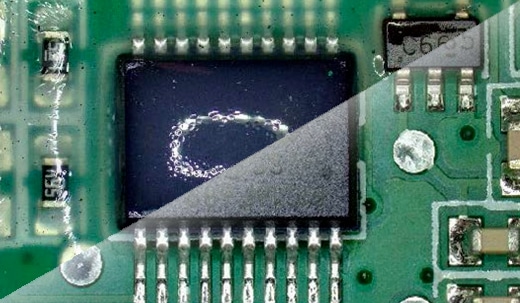
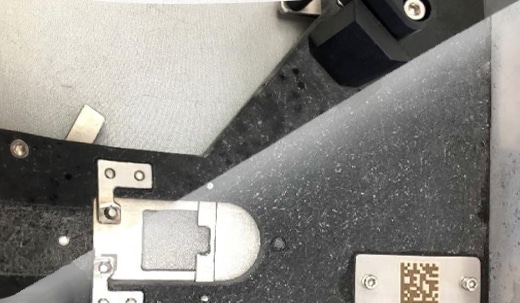
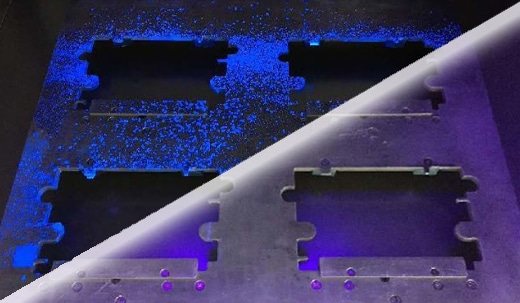
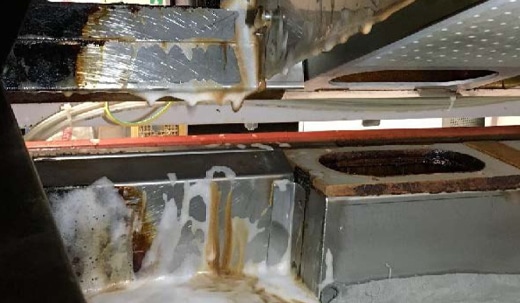
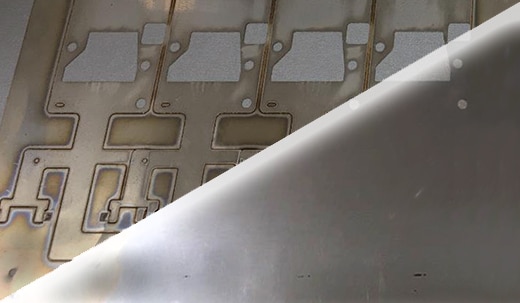
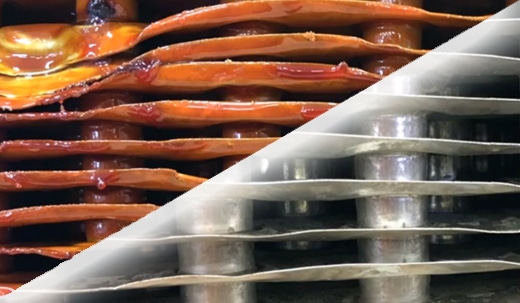
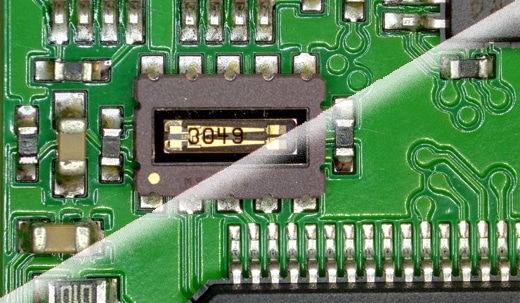
In high-reliability electronics manufacturing, conformal coating removal is a highly specialized and critical procedure. Whether you need to recover a high-value printed circuit board assembly (PCBA) for rework and failure analysis, or you must continuously clean heavily built-up coating frames and pallets, an unoptimized removal process drives up your Cost of Poor Quality (COPQ). Manual scraping, sandblasting, or the use of harsh, universal thinners routinely damage sensitive PCBA components, destroy expensive composite tooling, and pose severe operator hazards. Our advanced chemical decoating solutions replace destructive mechanical methods with precision chemistry, utilizing both physical dissolution and advanced chemical bond cleavage to remove even the most highly cross-linked polymers safely and efficiently.
Process engineers understand that not all conformal coatings are created equal. Linear polymers, such as standard acrylics, interact via simple intermolecular forces and can be removed using a physical mechanism—where the cleaning agent safely separates the polymer chains, leading to complete dissolution. However, highly cross-linked polymers like polyurethanes, silicones, and synthetic rubbers form dense 3D networks that resist standard solvents, leading only to ineffective swelling. To combat this, our specialized silicone and rubber removers employ a chemical mechanism. Acting like molecular scissors, these highly engineered fluids actively cleave the Si-O bonds within the polymer matrix, completely dissolving the coating without inducing mechanical stress or degrading the underlying FR4 substrate, solder joints, or sensitive component markings. When paired with our high-pressure InJet® Spray-in-Air or AirJet® air-bubbling systems, complete removal is achieved rapidly without shadowing effects.
The financial impact of scrapped PCBAs due to failed rework or damaged solder pallets is massive. High-value assemblies cannot be casually discarded when a component fails or requires upgrading. By implementing a reliable, automated coating removal process, facilities can recover these critical boards, turning guaranteed losses into profitable salvage. Furthermore, manual cleaning of coating pallets often destroys the nano-coatings and composite structures of the frames, forcing frequent and expensive tooling replacements. Our automated decoating solutions drastically extend the life of your hardware. This transition from manual labor and tooling replacement to an automated, high-capacity chemical wash yields a rapid reduction in Total Cost of Ownership (TCO) and delivers a verifiable ROI.
Traditional conformal coating removal relies heavily on highly flammable solvents, aggressive thinners provided by coating manufacturers, or toxic chemicals like N-methylpyrrolidone (NMP) and corrosive activators. These pose severe flammability risks, require expensive explosion-proof ATEX environments, and expose operators to dangerous VOCs. We have revolutionized this process by introducing advanced water-based decoating fluids, such as our Decotron® EFD1. Formulated specifically for acrylics and urethanes, this pH-neutral, environmentally friendly fluid boasts a high flash point, exceptional biodegradability, and zero severe safety hazards, allowing you to bring coating removal directly onto the main production floor safely.
Selecting the precise cleaning agent based on your polymer type is the single most important factor for successful coating removal. Match your coating to our specialized portfolio:
| Product Name | Primary Application | Polymer Target | Key Technical Feature |
|---|---|---|---|
| Decotron® EFD1 | Frames & PCBAs | Acrylics & Polyurethanes | Water-based, pH-neutral, highly eco-friendly, exceptional compatibility. |
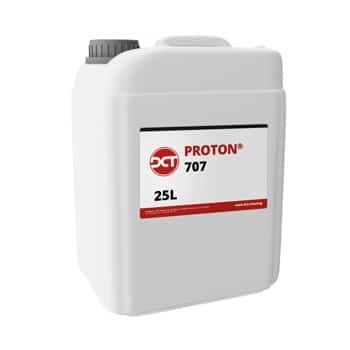
| Proton® 707 | PCBAs & Tooling | Silicones | Extremely fast chemical bond cleavage, high compatibility with metals. |
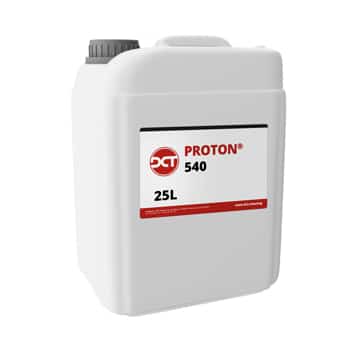
| Proton® 540 | Maintenance & Rework | Epoxy & Tough Urethanes | Aggressive solvent action for highly cross-linked, resistant polymers. |
| Proton® 561 / SRD1 | Heavy Tooling & PCBAs | Synthetic Rubber | Specifically formulated to break down extremely thick rubber matrices. |
This is determined by the polymer’s structure. Linear polymers (like acrylics) can be physically separated and dissolved by standard solvents. However, cross-linked polymers (like polyurethanes and silicones) form a continuous 3D network. When a standard solvent enters this network, the coating absorbs it and swells, but the chemical bonds hold the structure together. To dissolve these, you must use a fluid like Proton 707 that utilizes a chemical mechanism to actively cut those bonds.
Yes. Historically, only aggressive solvents were used. However, our Decotron EFD1 is a state-of-the-art, water-based formulation specifically engineered to strip acrylic and polyurethane coatings. It provides a massive EHS advantage by eliminating severe flammability hazards while maintaining broad-spectrum efficiency in automated spray-in-air machines.
Our chemistries are meticulously formulated to target specific polymer chains while remaining inert to standard PCBA materials. For instance, while older generation silicone removers could cause galvanic corrosion on copper or aluminum, our advanced Proton 707 provides exceptional metal compatibility, restoring the board to a clean, workable state without damaging the circuitry.
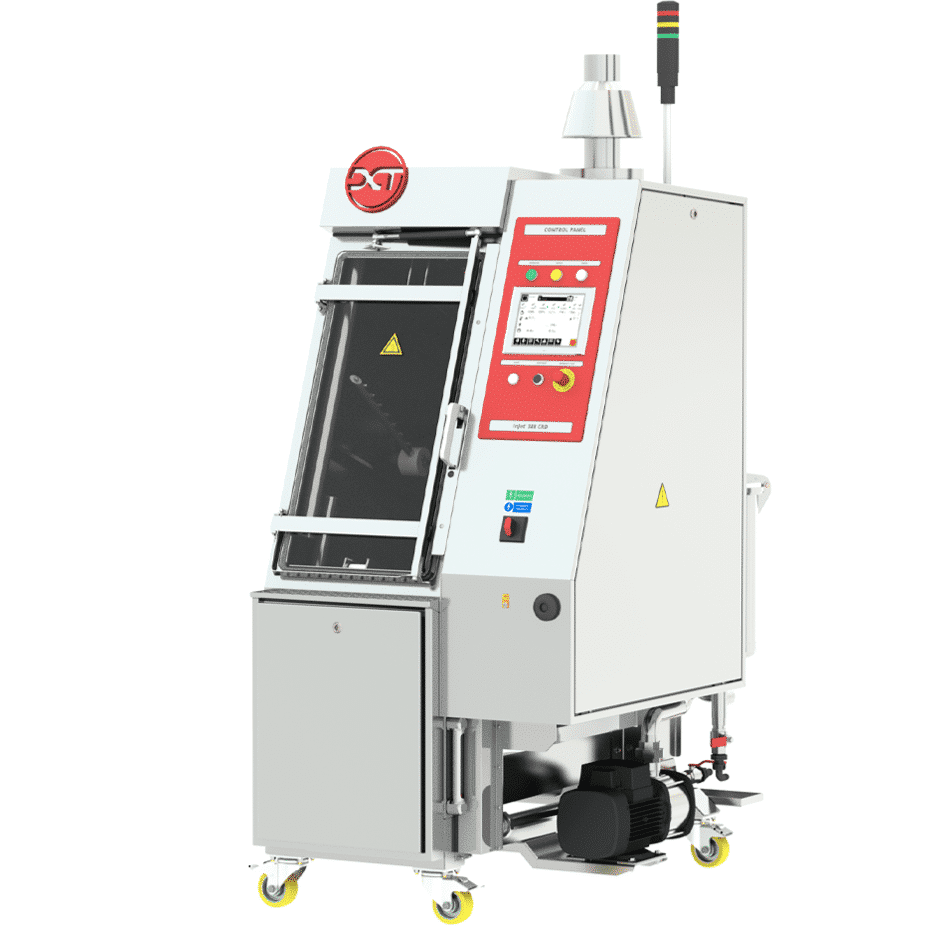
For high-volume frame cleaning, horizontal or vertical Spray-in-Air systems (like our InJet® 888 or 388 CRD) utilizing Decotron EFD1 are ideal for acrylics and urethanes. For highly complex geometries or extremely thick layers, AirJet® air-bubbling technology is highly effective, as it fully submerges the frame, allowing the chemistry to penetrate deep into crevices without line-of-sight shadowing.
Absolutely. Whether using water-based or solvent-based removers, active chemistry and dissolved polymer residues remain on the surface. A thorough rinsing phase using DI water (for water-based processes) or specialized solvent rinses (for silicone removal) is mandatory to ensure the board is perfectly clean, ionically safe, and ready for re-coating or reliable field operation.
Stop accepting scrapped assemblies and ruined coating frames as a standard cost of doing business. By integrating our polymer-specific decoating chemistries and automated systems, you can achieve safe, repeatable, and non-destructive conformal coating removal. Contact our chemical engineering team today to submit your coated samples for a free laboratory analysis, and let us design the exact chemical and mechanical process your production demands.





100% RESPONSIBILITY FOR THE CLEANING PROCESS
We take full responsibility for the functionality of the cleaning process.
Complete cleaning solutions
We can offer complete cleaning solutions for all existing applications.
Quality of cleaning systems
We manufacture cleaning systems exclusively in stainless steel because it has long-term advantages.
pure quality of cleaning agents
We care about the functionality of the cleaning chemistry, but also about ecology.
Technical and economic improvements
With every project, our greatest motivation is to bring the customer a better technical and economic solution.
Development and customization
By continuously developing our cleaning technologies, we are moving forward and responding to developments in the electronics industry.
Democenters Worldwide
We give customers the opportunity to actually test the cleaning solution.
Direct service Support
For us, service support does not end with the installation, it begins.