Conformal coating removal for PCBAs and production tooling
DCT develops the cleaning machine and the cleaning fluid as one validated process for removing cured and uncured coatings from PCBAs, coating frames, and coating-machine parts.
Send your coating sample for process evaluation
What can a conformal coating cleaning process remove?
A DCT process can be developed for acrylic, polyurethane, silicone, synthetic-rubber, and other documented coating types. The result depends on the exact coating formulation, cure state, layer thickness, substrate, geometry, and materials that must remain unaffected.
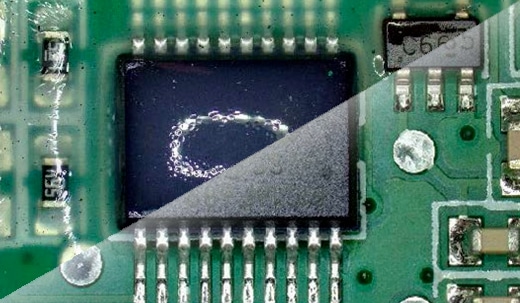
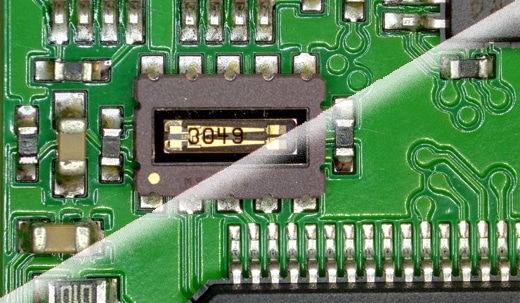
- PCBAs: complete or selective coating removal for repair, analysis, or recoating.
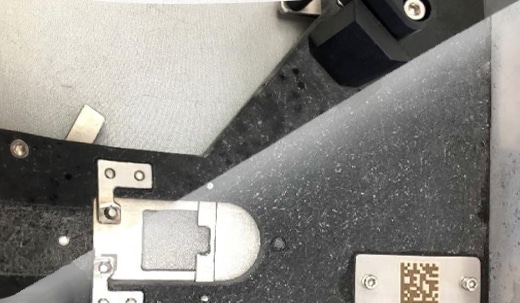
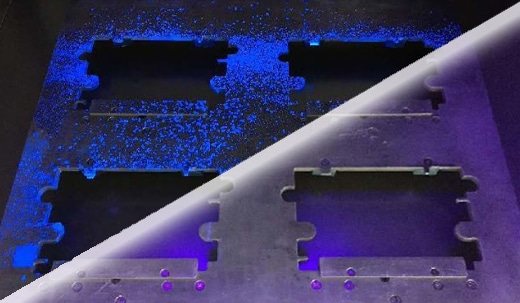
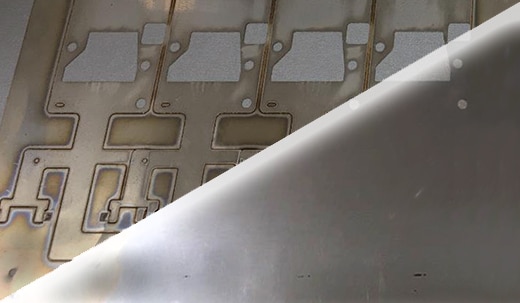
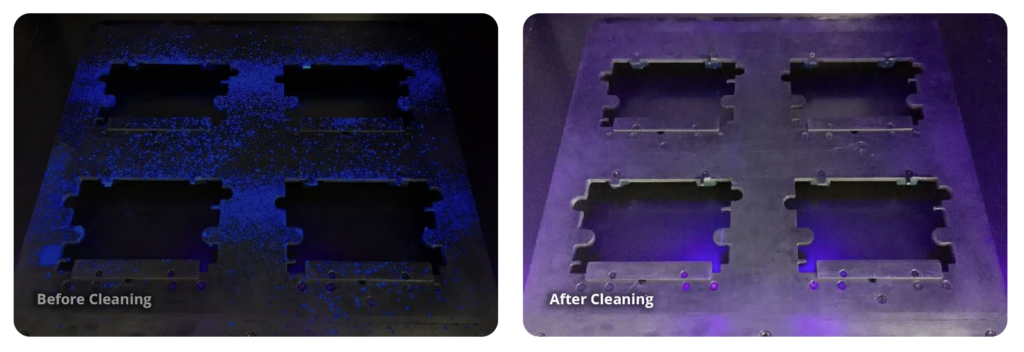
- Coating frames and pallets: removal of accumulated coating so tooling can return to production.
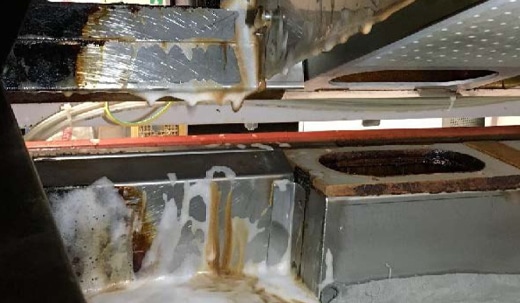
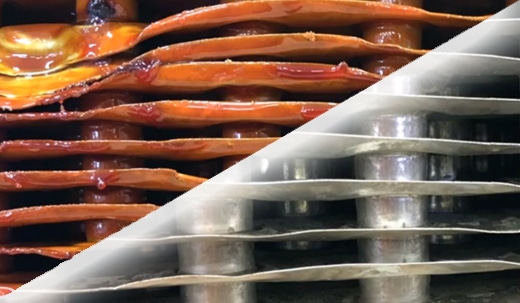
- Coating-machine parts: removal of compatible coating residues from removable production parts.
The coating name alone is not enough to set a production process. DCT recommends testing the real coated part before defining the cleaning fluid, technology, temperature, time, rinsing, and drying stages.
Which cleaning fluid and technology fit each coating type?
The table is a starting point for sample testing, not a universal compatibility guarantee.
| Coating type | Documented DCT options | Typical cleaned parts | What must be verified |
|---|---|---|---|
| Acrylic | Decotron® EFD1 or Proton® 275, depending on the coating and process | PCBAs, coating frames, and coating-machine parts | Cure level, labels, plastics, component markings, and rinse sequence |
| Polyurethane | Decotron® EFD1, Proton® 275, or Proton® 540, depending on the formulation | PCBAs, coating frames, and coating-machine parts | Whether the coating dissolves or swells, required agitation, exposure time, and material compatibility |
| Silicone | Proton® 707 | PCBAs and coating tooling | Other silicone parts, seals, adhesives, labels, plastics, metals, and the required rinse |
| Synthetic rubber or another resistant coating | A dedicated DCT laboratory test is required | Primarily coating frames and tooling; PCBA suitability must be tested | Exact polymer, achievable removal level, exposure time, and substrate damage risk |
Explore the verified DCT categories for Decotron® water-based cleaning agents, Proton® solvent-based cleaning agents, and InJet® spray-in-air cleaning systems.
How DCT defines a repeatable coating-removal process
- Identify the application. Record the exact coating, cure conditions, layer age and thickness, part type, substrate, and required cleaning level.
- Test the real sample. Compare suitable fluids and cleaning technologies on representative parts.
- Check material compatibility. Inspect components, labels, inks, adhesives, seals, plastics, metals, and surface finishes.
- Set the full cycle. Define cleaning, draining, rinsing, and drying parameters for the selected machine and fluid.
- Confirm the result. Agree on the inspection method and acceptance criteria before production implementation.
Why must material compatibility be tested?
A fluid that removes a coating can also affect another material on the same assembly. DCT tests have identified case-specific effects on labels, printed markings, connector parts, rubber seals, adhesives, plastics, paint, RFID components, and other sensitive materials.
For this reason, no cleaning fluid should be selected only by the broad coating family. The test must use the actual assembly or a representative material set and must include the planned exposure, temperature, rinsing, and drying conditions.
One supplier for the machine, fluid, and cleaning process
DCT takes 100% responsibility for the cleaning process when the customer uses both the DCT cleaning machine and the DCT cleaning fluid within the validated process conditions.
DCT has more than 25 years of market experience and supports customers worldwide through a local distributor network.
Selecting the Right Chemistry by Polymer Type
Selecting the precise cleaning agent based on the polymer type is the single most important factor for successful coating removal:
- For Acrylics and Polyurethanes: Utilize Decotron EFD1. This revolutionary water-based, pH-neutral fluid safely strips acrylics and urethanes from both PCBAs and coating frames. It is fully optimized for automated high-pressure spray and air-bubbling systems, eliminating severe flammability hazards.
- For Silicones: Choose Proton 707. Specifically engineered for silicone conformal coatings with a surface energy below 24 mN/m, this alcohol-based solvent acts like molecular scissors to actively cleave Si-O bonds, dissolving the silicone matrix quickly and effectively without causing galvanic corrosion.
- For Resistant Polyurethanes & Heavy Maintenance: Select Proton 537. Optimized for heavy tooling and coating frames, it offers the highest efficiency in breaking down baked-on resins and tough polyurethanes.
Recommended Hardware Systems for Coating Removal
The chemical properties of our fluids reach peak efficiency when paired with optimal mechanical agitation:
- Air-Bubbling Technology: For highly complex geometries or extremely thick layers on coating frames, air-bubbling technology is highly effective. It fully submerges the frame, allowing the chemistry to penetrate deep into crevices without line-of-sight shadowing.
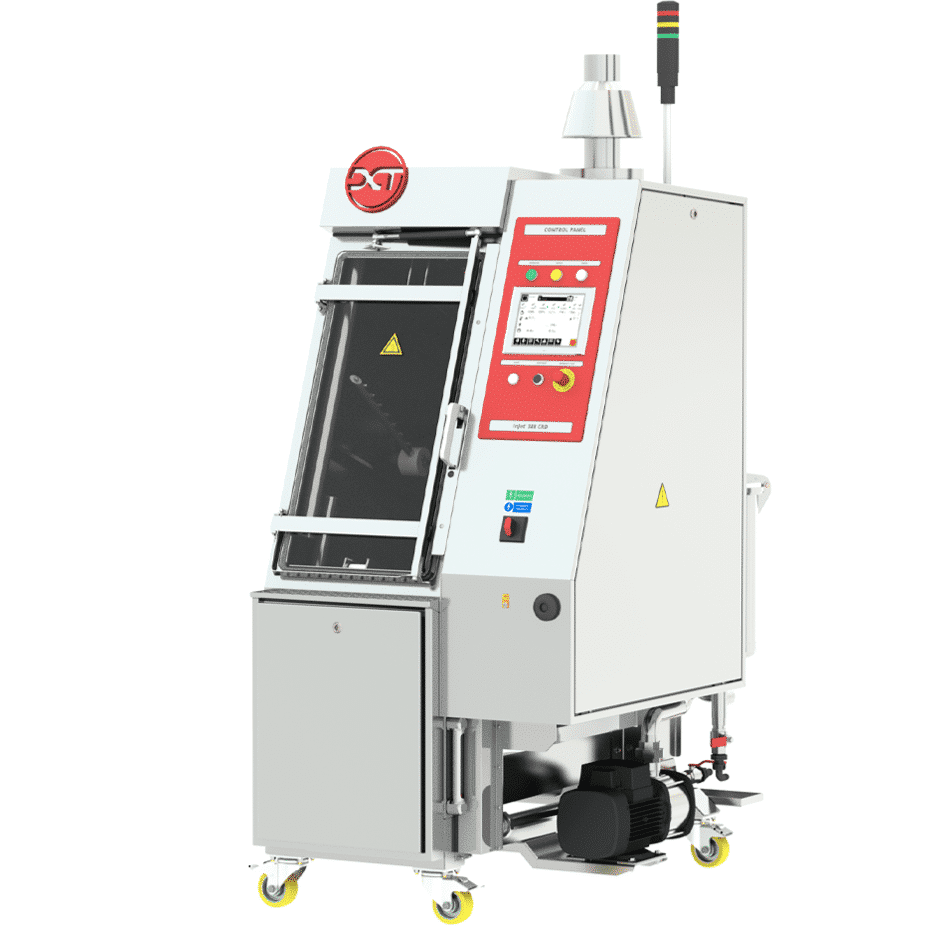
- InJet 888 CRD: The ultimate heavy-duty system utilizing advanced Spray-in-Air technology. It is capable of processing high volumes of heavily built-up coating frames and pallets, drastically reducing your Cost of Poor Quality (COPQ) associated with manual scraping.
Discover more about our Spray-in-Air technology and available batch cleaners in the InJet Cleaning Systems section.
Frequently asked questions about conformal coating removal
Can one cleaning fluid remove every conformal coating?
No. Acrylic, polyurethane, silicone, synthetic-rubber, and mixed formulations respond differently. Even coatings in the same family can require different fluids or process settings.
Can DCT remove coating from both PCBAs and coating frames?
Yes, DCT has documented tests for PCBAs, coating frames, pallets, and coating-machine parts. The cleaning target and acceptable material changes must be defined separately for each part.
Does a successful coating-removal test guarantee component compatibility?
No. Coating removal and material compatibility are separate acceptance criteria. Both must be checked on representative parts.
Which cleaning technology is used?
DCT tests spray-in-air, ultrasonic, air-bubbling, immersion, or a combination of methods according to the coating, geometry, substrate, required capacity, and compatibility limits.
Is rinsing required after coating removal?
The rinse depends on the selected cleaning fluid and the part. DCT defines the cleaning, rinsing, and drying sequence together during process validation.
What information should I send for an initial evaluation?
Provide the coating trade name and technical documentation, cure conditions, photographs, part materials, dimensions, contamination age and thickness, expected throughput, and the required cleanliness or rework result.
Start with your real coating and part
Send DCT a representative sample and the available process information. The team will evaluate the coating-removal route and identify which further compatibility and process tests are needed.
Conformal coatings and related materials successfully tested and removed by DCT
| Contaminant / trade name | Contaminant type | Application / cleaned part | Successfully used DCT fluid | Test note |
|---|---|---|---|---|
| AB Chimie AVR80 | Acrylic conformal coating | Coating frame | Decotron® EFD1 | Perfectly cleaned in the DCT test; result depended on the thin, not highly cured layer. |
| HumiSeal 1B31 | Acrylic conformal coating | PCB | Proton® 69 | Successfully removed in an InJet® 388 CRD test; yellow stickers were not compatible. |
| HumiSeal 1B73 | Acrylic conformal coating | PCBA | Decotron® 411 or Proton® 69 | Both documented options achieved the required coating and flux removal; the process trade-offs differed. |
| HumiSeal 1R32A-2 | Acrylic conformal coating | Aluminum coating frame | Decotron® EFD1 | Complete removal was confirmed by detailed inspection; UV-reflecting spots were not residual coating. |
| PETERS ELPEGUARD SL 1307 FLZ | Acrylic conformal coating | Coating frame | Proton® 69 | Perfect cleaning result obtained in the documented ultrasonic test. |
| PETERS ELPEGUARD SL 1307 FLZ/2 | Acrylic conformal coating | Coating frame | Proton® 703 | Frames were completely cleaned in a horizontal spray-in-air test; a defined rinse followed. |
| PETERS ELPEGUARD SL 1309 N | Conformal coating | Coating frame | Decotron® EFD1 | All residues, including residues around pins, were removed in both tested automated technologies. |
| PETERS SL 1306 | Acrylic conformal coating | Coating frame | Proton® MEK | The coating was successfully removed; heavier contamination required a slower-evaporating alternative. |
| PETERS SL 1307 | Acrylic conformal coating | PCBA | Proton® 550 | Recommended after a successful DCT removal test; subsequent defluxing was also specified. |
| PETERS SL 1307 FLZ/18 (323) | Acrylic conformal coating | Coating frame | Proton® 275 | Perfect result obtained with sonication; the optimum time depends on coating thickness. |
| PETERS SL 1307 FLZ/182 | Polyacrylate conformal coating | Black-anodized aluminum coating frame | Decotron® EFD1 | Successful removal confirmed by UV and stereomicroscope inspection. |
| PETERS SL 1307 FLZ/232 | Acrylic conformal coating | Coating frame | Decotron® EFD1 | Successfully cleaned in the documented InJet® 888 CRD test. |
| PETERS SL 1307 FLZ/234 | Acrylic conformal coating | Coating frame | Decotron® EFD1 | Perfectly removed in the documented automated cleaning test. |
| BECTRON PL 4122-E BLF | Polyurethane/alkyd conformal coating | Coating frame | Decotron® EFD1 | Decoating was completed in the DCT spray-in-air test; the two frames required different times. |
| Dymax 9483 | Acrylated-urethane conformal coating | Coating frame | Decotron® EFD1 | Successfully cleaned in the documented InJet® 888 CRD test. |
| Elantas Bectron PL 4122-40E BLF FLZ | Urethane-modified alkyd coating | Coating frame | Decotron® EFD1 | Successfully removed; the modified urethane coating required more time than the acrylic comparison sample. |
| HumiSeal 1A27 | Conformal coating | Coating frame | Decotron® EFD1 | The documented horizontal spray-in-air test achieved complete removal. |
| HumiSeal 1A33 | Polyurethane conformal coating | Aluminum coating frame | Decotron® EFD1 | Complete removal was achieved; the thicker side required a longer cleaning time. |
| HumiSeal 1A33 | Polyurethane conformal coating | PCB | Proton® 537 | Successfully cleaned in an automated InJet® 388 CRD test; labels required attention. |
| HumiSeal 1A68 | Polyurethane coating | Coating frame | Proton® 550 or Decotron® EFD1 | Proton® 550 was tested for a static bath with manual finishing; agitated heated Decotron® EFD1 avoided manual finishing in the documented test. |
| HumiSeal UV40 | Polyurethane conformal coating | Coating frame | Decotron® EFD1 | The disassembled frame was perfectly cleaned; inks and labels were not compatible with the tested process. |
| HumiSeal UV500 | Conformal coating | Coating frame and mask | Decotron® EFD1 | Complete removal was achieved in the documented horizontal spray-in-air test. |
| PETERS SL 1301 ECO-FLZ | Modified polyurethane conformal coating | Coating frame | Decotron® EFD1 | The tested frame reached the required result without observed material incompatibility. |
| PETERS SL 1305 AQ-ECO-FLZ | Polyurethane conformal coating | Coating frame | Decotron® EFD1 | Successfully cleaned in the documented InJet® 888 CRD test. |
| PETERS ELPEGUARD DSL 1600 E-FLZ | Conformal coating | Coating frame | Decotron® EFD1 | Frames were successfully cleaned with a new holder design; older coating and dense loading increased time. |
| PETERS Twin-Cure DSL 1600 E-FLZ/75 | Conformal coating | Coating frame | Proton® 69 or Proton® 537 | The fluids swelled the coating; air-bubbling plus documented manual brushing produced the best tested removal. |
| WEVOPUR 5523 FL/10 + WEVONAT 300 | Polyurethane coating | Coating frame | Proton® 537 | Extreme contamination was completely removed in the documented comparison test. |
| DOW CORNING 1-2577 | Silicone conformal coating | PCBA | Proton® 705 or Proton® 707 | Both fluids removed the coating; Proton® 705 was selected for the final test because of the observed compatibility trade-off. |
| DOWSIL 3-1953 | Silicone conformal coating | PCBA | Proton® 705 | Complete removal was achieved in the documented vertical spray-in-air test. |
| DOWSIL 3-1965 | Silicone conformal coating | Coating frame | Proton® 707 | Complete removal was achieved; PVC-like plastic parts were not compatible with the tested process. |
| DOWSIL 3140 Mil-A-46146 RTV Coating | Silicone coating | Coating frame and production part | Proton® 707 | Successfully dissolved in the documented DCT test. |
| DOWSIL EA-9187 L UV | Silicone conformal coating | Coating frame | Proton® 707 | Complete removal was confirmed by an ink wetting test. |
| HumiSeal 1C49LV | Silicone conformal coating | PCBA | Proton® 705 or Proton® 707 | Both fluids removed the coating; the test documented different cleaning times and component compatibility effects. |
| Momentive ECC3050S | Silicone conformal coating | PCBA | Proton® 707 | Complete removal was achieved; the full process included a specified solvent and DI-water rinse. |
| Momentive ECC3051S | Silicone conformal coating | PCB | Proton® 703 | Boards were completely free of coating residues after the documented ultrasonic process and rinse sequence. |
| Momentive ECC3051S | Silicone conformal coating | Aluminum coating frame | Proton® 707 | Silicone removal was successfully confirmed in a coating-frame comparison test. |
| Silicone DC3 / likely RTV coating | Silicone conformal coating | PCBA | Proton® 707 | The DCT test achieved complete silicone removal; a separate white residue remained for further evaluation. |
| Silicone coating CV-1152 | Silicone coating | PCBA | Proton® 705 | The silicone layer was successfully dissolved in the documented immersion test. |
| Titan Series ANG T5 | Silicone-based coating | Masks and filters | Proton® R09 | The documented InJet® 888 CRD process achieved complete removal. |
| Unknown silicone conformal coating | Silicone conformal coating | PCBA in aluminum/plastic housing | Proton® 707 | Successfully removed in immersion and spray-in-air tests; blind cavities affected the required process. |
| Unknown silicone conformal coating | Silicone conformal coating | Aluminum coating frame | Proton® 707 | Removal was confirmed by an ink wetting test without manual intervention. |
| HumiSeal 1B51 | Synthetic-rubber conformal coating | Aluminum coating frame | Proton® 561 | Successfully removed in an automated InJet® 888 CRD process; earlier cleaning reduced the required time. |
| ELEPCOAT LSS520MHB | Conformal coating | PCB | Proton® 560 | No coating traces were observed after the documented automated test. |