The Hidden Cost of Poor Quality (CoPQ) in Electronic Assembly
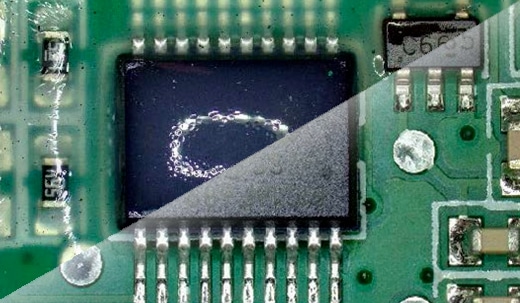
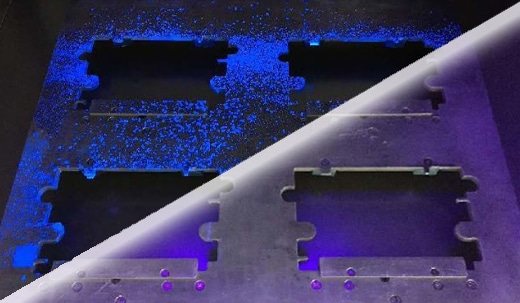
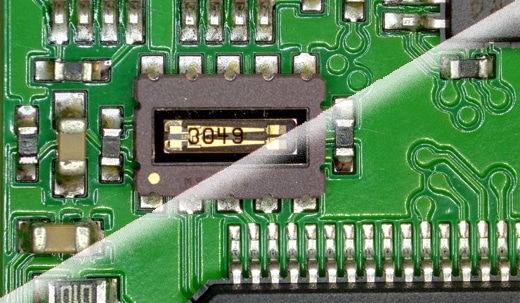
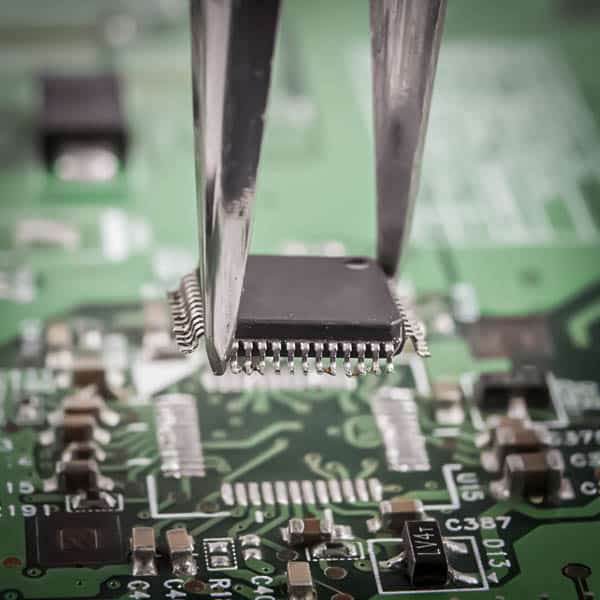
In the highly regulated ecosystem of Surface Mount Technology (SMT) and printed circuit board assembly (PCBA), manual cleaning is frequently the most vulnerable step. When operators perform localized PCBA rework, wipe un-reflowed solder paste from misprinted stencils, or conduct routine maintenance on internal reflow oven chambers, utilizing inadequate commodity solvents directly contributes to catastrophic failures. Attempting to use basic Isopropyl Alcohol (IPA) for manual maintenance results in unaddressed ionic contamination, sticky white residues, and severe safety hazards. This invisible contamination interacts with moisture and voltage to initiate electrochemical migration and dendritic growth. The true Cost of Poor Quality (CoPQ) extends far beyond scrapped boards—it jeopardizes field reliability, shortens the bath life of your expensive automated machine chemistry, escalates your Total Cost of Ownership (TCO), and undermines compliance with strict IPC-A-610 standards.
We do not merely supply standard chemical fluids; we deliver a highly engineered, end-to-end process solution. By partnering with DCT, you immediately secure three strategic organizational advantages:
Optimizing manual maintenance requires alignment across multiple departments. DCT’s targeted manual cleaning portfolio solves the specific challenges of your engineering, financial, and safety leadership.
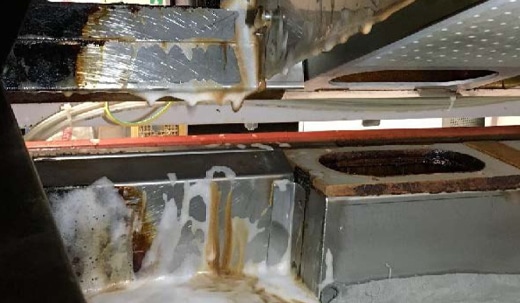
Your objective is fault-free production and strict adherence to cleanliness metrics. Standard solvents like IPA fail because they evaporate almost instantly upon contact with warm oven surfaces, flashing off before they can chemically break down a hardened flux matrix. DCT utilizes proprietary Active Foam Technology in our water-based oven cleaners. Upon manual spraying, our fluids generate a dense foam that forcefully clings to vertical and inverted reflow oven walls. This suspends the active chemistry against the contamination for several minutes, maximizing the necessary chemical dwell time to completely soften and saponify the heavy oxidation without aggressive mechanical scraping. Furthermore, our stencil cleaners dissolve solder paste instantly without degrading delicate nano-coatings, ensuring pristine aperture release.
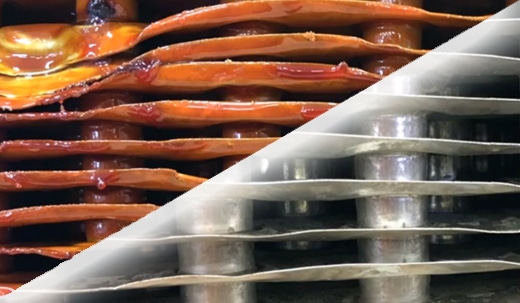
Evaluating industrial cleaning chemistry purely by price-per-liter ignores the Total Cost of Ownership (TCO). Heavily baked wave solder pallets and condensation traps carry extreme volumes of thick flux and tin salts. If placed directly into your automated spray-in-air machine without intervention, this gross contamination rapidly saturates and depletes the expensive automated bath chemistry. By implementing a standardized manual pre-cleaning step using our heavy-duty active foams, operators can quickly strip away the worst buildup. This hybrid approach significantly extends the operational lifespan of your automated bath chemistry, minimizes machine downtime, drastically reduces fluid consumption overhead, and optimizes your Return on Investment (ROI).
Operator safety and environmental audits are critical priorities. Applying highly flammable IPA near hot process chambers introduces a massive fire and explosion hazard, while exposing operators to hazardous Volatile Organic Compound (VOC) emissions. DCT transforms factory safety protocols. Our heavy-duty, water-based manual cleaners feature zero flash points, entirely eliminating the severe fire risks associated with oven maintenance. Our solutions ensure strict compliance with global RoHS and REACH health regulations, providing your workforce with a hazard-free, odor-controlled working environment.
Using an aggressive alkaline cleaner on sensitive metal can cause galvanic corrosion, while using a light solvent on baked flux will be entirely ineffective. Match the fluid to the contamination precisely:
| Product Name | Primary Manual Application | Key Technical Feature |
|---|---|---|
| Reflow Cleaner 94 | Reflow Ovens, Cooling Zones, Sensitive Aluminum Parts | Water-based active foam, zero flash point. Specifically inhibited to prevent galvanic corrosion on soft metals. |
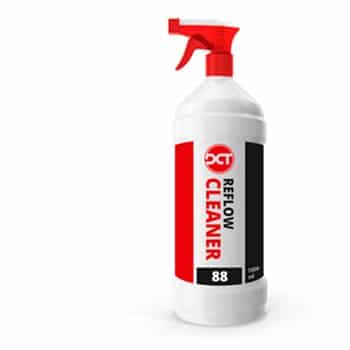
| Reflow Cleaner 88 | Stainless Steel Parts, Wave Solder Pallets, Condensation Traps | Heavy-duty alkaline formulation designed to saponify heavily polymerized, baked-on flux resins. |
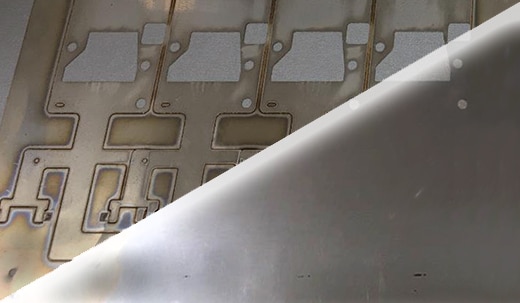
| Stencil Cleaner 11 | Printing Stencils, Squeegees, Double-sided Board Misprints | Instant solvency for un-reflowed solder paste and adhesives. Fast evaporation without degrading nano-coatings. |
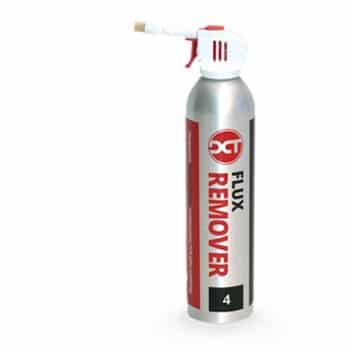
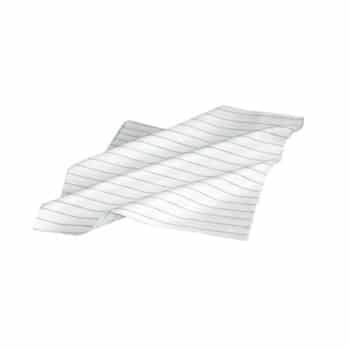
| Flux Remover 4 | Manual PCBA Repair, Localized Defluxing (Rework) | High-purity universal defluxer. Leaves zero white residues when utilized with an ESD-safe absorbent wipe. |
1. Why is Isopropyl Alcohol (IPA) a poor choice for manual reflow oven cleaning?
To chemically break down a hardened, polymerized flux matrix, the cleaning agent must remain in liquid contact with the soil for several minutes. IPA evaporates almost instantly. Because it lacks extended dwell time, it flashes off before it can saponify the flux, forcing operators to resort to abrasive and damaging mechanical scraping.
2. Can we clean the reflow oven while the process chambers are still hot?
Most specialized water-based reflow cleaners, including Reflow Cleaner 94, are thermodynamically optimized to perform most efficiently on warm surfaces (typically 40-60°C), which assists the saponification process. Because our water-based cleaners have zero flash points, they can be safely applied without the severe ignition risks associated with IPA.
3. Are heavy-duty alkaline cleaners safe for all metal machine surfaces?
No. Aggressive alkaline formulations (like Reflow Cleaner 88) are excellent for robust stainless steel but can rapidly dull, etch, or corrode soft metals like aluminum and brass. For aluminum oven components, process engineers must select a specifically inhibited fluid (Reflow Cleaner 94) to protect the metallic integrity.
4. Why is an ESD-safe wipe mandatory for manual PCBA rework?
If you spray a defluxing agent and allow it to dry, the fluid dissolves the flux but the ionic contamination remains on the board surface, resulting in a sticky white residue. An ESD-safe absorbent wipe physically traps and permanently removes the contaminated fluid from the assembly while protecting micro-components from static discharge.
5. Should I manually pre-clean heavily soiled solder pallets before automated washing?
Yes. Sending heavily crusted pallets directly into an automated machine will rapidly overwhelm and saturate the wash chemistry. Applying a heavy-duty active foam to loosen and brush off the gross contamination prevents rapid depletion of your automated machine’s fluid, drastically extending bath life and lowering your OPEX.
6. Are DCT manual cleaning agents compatible with internal machine plastics and seals?
Absolutely. DCT prioritizes material compatibility. Our specialized chemistries are rigorously tested against industrial polymers to ensure that silicone seals, plastic covers, viewing windows, and sensitive machine sensors do not swell, crack, or degrade during the cleaning process.
The DCT Research & Development laboratory meticulously tests industry-standard solder pastes, liquid fluxes, and SMT adhesives to guarantee rapid solvency. Below is an extensive, verified database of specific contaminants successfully removed utilizing the DCT manual cleaning portfolio.
| Contaminant Brand & Designation | Material Classification | Optimal DCT Manual Fluid |
|---|---|---|
| Alpha OM-338 | Solder Paste (Un-reflowed) | Stencil Cleaner 11 |
| Alpha OM-340 | Solder Paste (Un-reflowed) | Stencil Cleaner 11 |
| Alpha CVP-390 | Solder Paste (Un-reflowed) | Stencil Cleaner 11 |
| Alpha EF-8000 | Liquid Wave Flux (Baked) | Reflow Cleaner 94 / 88 |
| Alpha EF-6100 | Liquid Wave Flux (Baked) | Reflow Cleaner 94 / 88 |
| Kester 256 | Solder Paste (Un-reflowed) | Stencil Cleaner 11 |
| Kester NP505-HR | Solder Paste (Un-reflowed) | Stencil Cleaner 11 |
| Kester NXG1 | Solder Paste (Un-reflowed) | Stencil Cleaner 11 |
| Kester 959T | Liquid Flux (Baked) | Reflow Cleaner 94 / 88 |
| Kester 979 | Liquid Flux (VOC-Free, Baked) | Reflow Cleaner 94 / 88 |
| Kester 952-D6 | Rosin Flux (Baked) | Reflow Cleaner 94 / 88 |
| Indium 8.9HF | Solder Paste (Un-reflowed) | Stencil Cleaner 11 |
| Indium 10.1 | Solder Paste (Un-reflowed) | Stencil Cleaner 11 |
| Indium 3.2 | Water Soluble Paste (Un-reflowed) | Stencil Cleaner 11 |
| Indium 1095-NF | Liquid Flux (Baked) | Reflow Cleaner 94 / 88 |
| Indium NC-771 | Liquid Flux (Baked) | Reflow Cleaner 94 / 88 |
| AIM NC258 | Solder Paste (Un-reflowed) | Stencil Cleaner 11 |
| AIM M8 | Solder Paste (Un-reflowed) | Stencil Cleaner 11 |
| AIM NC259 | Solder Paste (Un-reflowed) | Stencil Cleaner 11 |
| AIM NC277 | Liquid Flux (Baked) | Reflow Cleaner 94 / 88 |
| Loctite GC 10 | Solder Paste (Un-reflowed) | Stencil Cleaner 11 |
| Loctite GC 3W | Solder Paste (Un-reflowed) | Stencil Cleaner 11 |
| Senju M705-GRN360 | Solder Paste (Un-reflowed) | Stencil Cleaner 11 |
| Senju Sparkle Paste | Solder Paste (Un-reflowed) | Stencil Cleaner 11 |
| Heraeus F640 | Solder Paste (Un-reflowed) | Stencil Cleaner 11 |
| Cobar 390-RX9 | Solder Paste (Un-reflowed) | Stencil Cleaner 11 |
| Almit SRC-65 | Solder Paste (Un-reflowed) | Stencil Cleaner 11 |
| Almit LFM-48W | Solder Paste (Un-reflowed) | Stencil Cleaner 11 |
| Tamura TLF-204 | Solder Paste (Un-reflowed) | Stencil Cleaner 11 |
| Inventec Ecorel Free 305-16 | Solder Paste (Un-reflowed) | Stencil Cleaner 11 |
| Nihon Superior SN100C | Solder Paste (Un-reflowed) | Stencil Cleaner 11 |
| Stannol 500-6B | Liquid Flux (Baked) | Reflow Cleaner 94 / 88 |
| Emil Otto 500-11 | Liquid Flux (Baked) | Reflow Cleaner 94 / 88 |
| Koki S3X58-M406-3 | Solder Paste (Un-reflowed) | Stencil Cleaner 11 |
| MacDermid Alpha UP78 | Solder Paste (Un-reflowed) | Stencil Cleaner 11 |
| Amtech NC-559-V2 | Tacky Flux / Paste | Stencil Cleaner 11 |
| Loctite 3609 | SMT Adhesive (Uncured) | Stencil Cleaner 11 |
| Loctite 3621 | SMT Adhesive (Uncured) | Stencil Cleaner 11 |
| Fuji Red Glue | SMT Adhesive (Uncured) | Stencil Cleaner 11 |
| Heraeus PD 860002 | SMT Adhesive (Uncured) | Stencil Cleaner 11 |
Stop risking board reliability and factory safety with outdated, unverified maintenance routines. It is time to equip your operators with purpose-built, high-performance manual chemistries that work in perfect synergy with your automated production systems.
Contact the DCT technical engineering team today to establish a fully guaranteed, IPC-compliant cleaning protocol tailored specifically to your facility’s requirements.



100% RESPONSIBILITY FOR THE CLEANING PROCESS
We take full responsibility for the functionality of the cleaning process.
Complete cleaning solutions
We can offer complete cleaning solutions for all existing applications.
Quality of cleaning systems
We manufacture cleaning systems exclusively in stainless steel because it has long-term advantages.
pure quality of cleaning agents
We care about the functionality of the cleaning chemistry, but also about ecology.
Technical and economic improvements
With every project, our greatest motivation is to bring the customer a better technical and economic solution.
Development and customization
By continuously developing our cleaning technologies, we are moving forward and responding to developments in the electronics industry.
Democenters Worldwide
We give customers the opportunity to actually test the cleaning solution.
Direct service Support
For us, service support does not end with the installation, it begins.
Our references show the diversity of our customers and how we have been able to
to tailor our services to their needs and expectations.