Decotron® cleaning agents for electronics manufacturing
Decotron® is a family of water-based cleaning agents developed for defined cleaning applications in electronics production. Select the fluid according to the contaminant, cleaned part, cleaning technology, rinse requirements, and material compatibility.
Which Decotron® agent fits your application?
The groups below are an orientation guide. The final cleaning fluid and process parameters must be confirmed on representative samples.
Stencils, squeegees, and misprints
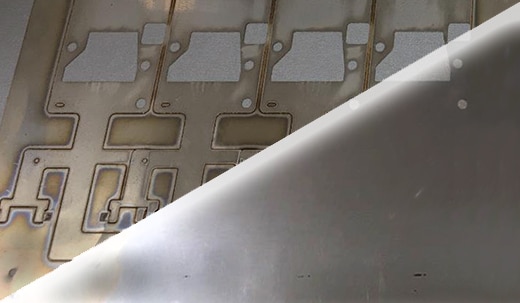
These agents are intended for uncured solder-paste residues, documented SMT adhesives, and related screen-printing contamination.
- Decotron® 23: wet cleaning in screen-printing equipment and compatible closed cleaning processes.
- Decotron® 239: stencils, misprints, squeegees, and documented process residues.
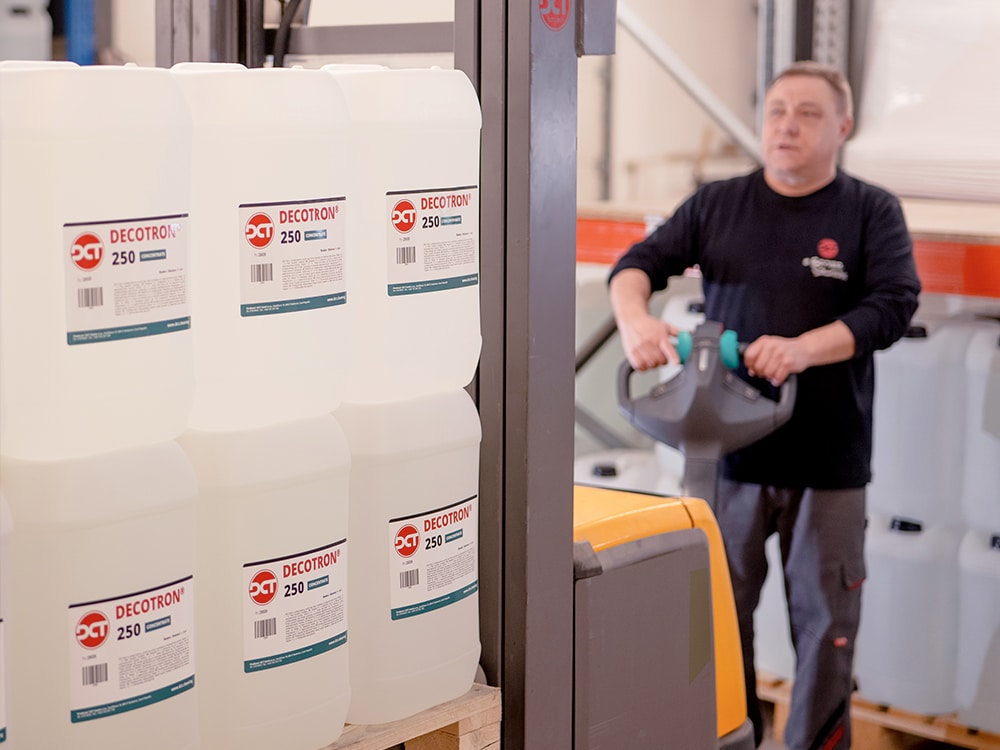
- Decotron® 250: stencils, misprints, and squeegees contaminated by solder paste.
- Decotron® 250/25: lower-concentration, lower-VOC option for documented solder-paste cleaning applications.
- Decotron® 281: solder paste and documented SMT-adhesive residues.
PCBAs after soldering
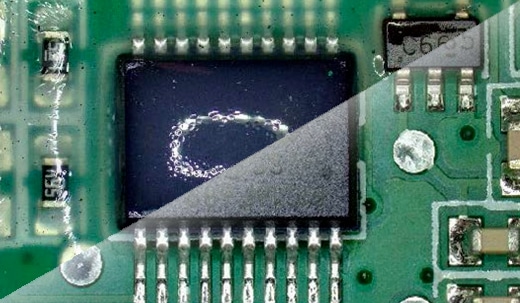
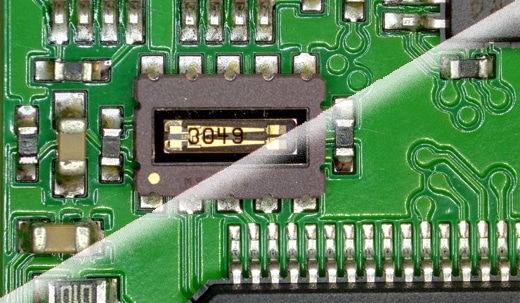
PCBA defluxing depends on the exact soldering material, component standoff, board orientation, rinse quality, drying, and compatibility with components and labels.
- Decotron® 351S: soldered PCBAs and selected misprint applications in spray-in-air or ultrasonic processes.
- Decotron® 355S: flux-residue removal in InJet® spray-in-air cleaning systems.
- Decotron® 356S: PCBA cleaning in ultrasonic processes.
- Decotron® 411A: modern flux-residue cleaning and documented misprint applications.
- Decotron® CP381: PCBAs after soldering and documented misprint cleaning.
Conformal coating removal
- Decotron® EFD1: removal of documented cured and uncured conformal coatings from coating frames, PCBAs, and coating-machine parts.
Coating formulation, cure state, layer thickness, substrate, labels, plastics, adhesives, and component materials must be tested before production use.
Maintenance cleaning
- Decotron® ACW 117: documented dust, grease, aluminum-part, flexible-frame, and rinse applications.
- Decotron® T300SA: flux residues on soldering frames, pallets, masks, and soldering-equipment parts.
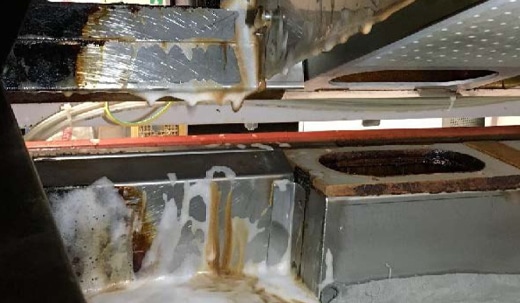
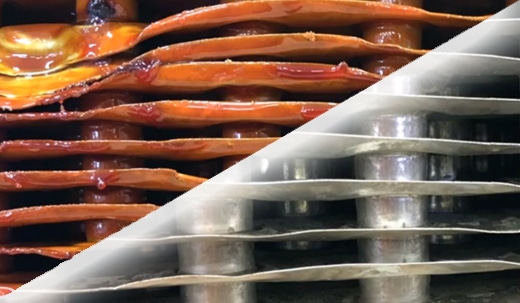
- Decotron® T332: maintenance cleaning, including documented filter and reflow-oven applications.
- Decotron® T392A: heavily contaminated maintenance parts in validated processes.
Manual cleaning
- Decotron® M50: manual cleaning of documented soldering-device contamination.
- Reflow Cleaner 88: manual removal of documented solder-paste and flux residues from soldering equipment.
- Reflow Cleaner 94: manual removal of documented flux residues from soldering equipment.
How to select and validate a Decotron® process
- Identify the contamination. Provide the exact solder paste, flux, adhesive, coating, grease, or other process material.
- Define the cleaned part. Record materials, dimensions, geometry, components, labels, coatings, seals, and sensitive surfaces.
- Choose the cleaning technology. Match the application to spray-in-air, ultrasonic, air-bubbling, screen-printer, or manual cleaning.
- Test the real sample. Verify removal in accessible areas and in critical gaps, cavities, apertures, or shadowed locations.
- Validate the complete cycle. Confirm cleaning, draining, rinsing, drying, filtration, inspection, and acceptance criteria.
What must be compared before choosing a cleaning agent?
| Criterion | Question to answer | Why it matters |
|---|---|---|
| Cleaning result | Is the required contamination removed from visible and critical locations? | A visually clean surface does not automatically confirm cleanliness under components or inside cavities. |
| Material compatibility | Are components, metals, plastics, labels, inks, adhesives, and finishes unchanged within the agreed limits? | Removal efficiency and compatibility are separate acceptance criteria. |
| Rinsing | Which rinse medium, quality, time, and filtration are required? | Residual cleaning fluid and redistributed contamination can affect the final result. |
| Drying | Can liquid drain from connectors, cavities, and complex geometries? | Part orientation and trapped liquid can determine the required drying process. |
| Process capacity | What loading, cycle time, bath management, and filtration are needed? | A laboratory result must be translated into a stable production process. |
One supplier for the cleaning machine, fluid, and process
DCT takes 100% responsibility for the cleaning process when the customer uses both the DCT cleaning machine and the DCT cleaning fluid within the validated process conditions.
DCT has more than 25 years of market experience and supports customers worldwide through a local distributor network.
Frequently asked questions about Decotron® cleaning agents
Are all Decotron® agents interchangeable?
No. Individual agents are intended for different contaminants, parts, technologies, rinse sequences, and compatibility requirements.
Can the cleaning fluid be selected only from the solder-paste or flux name?
No. The complete assembly design, residue age, reflow history, standoff height, process technology, rinse, drying, and material compatibility also affect the result.
Does a successful visual inspection confirm ionic cleanliness?
Not by itself. The inspection and acceptance method must be selected for the customer’s cleanliness requirements and application.
Must water-based cleaning be followed by rinsing?
The required rinse is product- and process-specific. DCT defines the rinse medium and parameters as part of the validated cleaning cycle.
Can one Decotron® agent clean multiple applications?
Some agents have more than one documented use. Each additional application still requires confirmation of cleaning performance and material compatibility.
What should I provide for a cleaning test?
Provide representative contaminated parts, exact contaminant documentation, materials, dimensions, process history, expected throughput, and measurable acceptance criteria.
Find the Decotron® process for your production
Send DCT representative samples and the available process information. The team will identify which cleaning, compatibility, rinsing, and drying tests are needed.
Solder pastes and fluxes successfully tested and removed from PCBAs by DCT
| Contaminant / trade name | Contaminant type | Application / cleaned part | Successfully used DCT fluid | Test note |
|---|---|---|---|---|
| 390-RX-HT | Soldering flux | PCBA after soldering | Decotron® 351S or Decotron® CP381 | Flux residues were completely removed in the documented DCT comparison test. |
| AIM H10 SAC305 88.7-T4 | Solder paste flux residue | PCBA after soldering | Decotron® 417XP | All residues, including those under the tested component, were removed. |
| AIM M8 | Solder paste flux residue | PCB after soldering | Decotron® CP381 | Complete removal was achieved after extending the documented cleaning time for a critical component. |
| AIM NC257 | Solder paste flux residue | PCBA after soldering | Decotron® 351S | The documented test achieved a complete cleaning result. |
| AIM NC258 SAC305 | Solder paste flux residue | PCB after soldering | Decotron® 351S | Complete removal was confirmed by visual inspection and a reduced ROSE value. |
| AIM V9 SAC305 88.5-T4 | Solder paste flux residue | PCBA after soldering | Decotron® 417XP | All residues, including those under the tested component, were removed. |
| Almit LFM-48U SUC-UI | Lead-free solder paste residue | PCBA after soldering | Decotron® 411A | The documented test achieved complete visual removal. |
| Almit LFM-48W TM HP-I | No-clean solder paste flux residue | PCBA after soldering | Decotron® 417XP | All flux residues and process contaminants were removed. |
| Almit LFM 48W TM-HP | Solder paste flux residue | PCBA after soldering | Decotron® 351S | The documented test achieved a complete cleaning result. |
| Almit SR-38 RMA LFM-48-S 3.5% | Solder paste flux residue | PCB after soldering | Decotron® CP381 | All residues were removed in the documented vertical spray-in-air test. |
| Alpha CVP-390 | Solder paste flux residue | PCBA after soldering | Decotron® 417XP | All tested flux types were removed in the documented process. |
| Alpha EF6850HF | Solder paste flux residue | PCBA after soldering | Decotron® 417XP | All flux residues and process contaminants were removed. |
| Alpha OEM 340 | Solder paste flux residue | PCBA after soldering | Decotron® 417XP | The documented test achieved 100% visual cleanliness and a zero ROSE result. |
| Alpha OM 340 | No-clean solder paste flux residue | PCBA after soldering | Decotron® 417XP | Visible flux residues were completely removed; under-component cleanliness required separate evaluation. |
| Alpha OM-338T | Solder paste residue | PCB after soldering | Decotron® CP381 | Cleaning effectiveness was confirmed by optical inspection and ROSE testing. |
| Alpha OM338PT | Solder paste flux residue | PCBA after soldering | Decotron® 351S | Successful surface removal was confirmed by visual inspection and ROSE testing. |
| Alpha Telecore HF-850 | Solder-wire flux residue | PCBA after soldering | Decotron® CP381 | The combined contamination was completely removed in the documented test. |
| COBAR 390 RX | Wave-soldering flux residue | PCBA after soldering | Decotron® 409 | The documented cleaned assemblies met the measured ionic-cleanliness criterion. |
| EMIL OTTO S-250/FRO | Soldering flux residue | PCB after soldering | Decotron® CP381 | The tested boards were completely free of residues. |
| Heraeus F 620 | Solder paste flux residue | PCB after soldering | Decotron® CP381 | All residues were removed in the documented vertical spray-in-air test. |
| Heraeus F645 IL-89M30 | Solder paste residue | PCB after soldering | Decotron® CP381A | Flux residues were completely removed in the documented process. |
| Indium 8.9 HF / TYPE 4 | Solder paste flux residue | PCBA after soldering | Decotron® 417XP | All flux residues were removed, with label and marking compatibility observations recorded separately. |
| Indium 8.9 HF SAC387 | Solder paste flux residue | PCB after soldering | Decotron® CP381A+ | The documented process removed the flux layer without observed material incompatibility. |
| Indium NC-SMQ92H | No-clean solder paste flux residue | PCBA after soldering | Decotron® 417XP | The flux was completely removed in the documented test without observed solder corrosion. |
| Indium SN62 NC-SMQ92J TYPE 3 | Solder paste flux residue | PCBA after soldering | Decotron® 417XP | All flux residues were removed; label and component-marking effects were recorded separately. |
| Interflux DP5505 | Solder paste flux residue | PCBA after soldering | Decotron® CP381 | All flux residues were removed in the documented combined-material test. |
| Interflux IF2005C | Soldering flux residue | Flexible PCB after soldering | Decotron® CP381 | Complete removal was confirmed by microscopy and a reduced ROSE value. |
| Interflux IF2005M | Soldering flux residue | PCBA after soldering | Decotron® 417XP | All tested flux types were removed in the documented process. |
| Kester TSF-6592 | Soldering flux residue | PCBA after soldering | Decotron® 417XP | All tested flux types were removed in the documented process. |
| KOKI S3X58 HF1100 | Solder paste flux residue | Flexible PCB after soldering | Decotron® 356S | Complete removal was achieved in the documented tabletop ultrasonic test. |
| KOKI S3X58 M500 | Solder paste flux residue | PCB after soldering | Decotron® 356S | Complete cleaning was achieved after the documented ultrasonic exposure. |
| KOKI SB6NX58-500SI | Solder paste flux residue | PCBA after soldering | Decotron® 411A | Removal was confirmed by visual inspection and a surface-wetting test. |
| Koki SS48-M956-2 | Leaded solder paste residue | PCBA after soldering | Decotron® 411A | The documented process achieved complete visual removal; an aluminum cooler required an adjusted fluid version. |
| LFSOLDER TLF-201-111 M | Lead-free solder paste flux residue | PCBA after soldering | Decotron® 409 | The tested PCBA was completely cleaned. |
| LFSOLDER TLF287-171AT | Lead-free solder paste flux residue | PCBA after soldering | Decotron® 409 | The tested PCBA was completely cleaned. |
| Loctite GC10 SAC305T4 | Solder paste flux residue | LED panels after soldering | Decotron® CP381A | Flux residues, solder balls, and related contaminants were successfully cleaned in the documented process. |
| Nevo P30 | No-clean flux residue | PCBA after soldering | Decotron® 417XP | Visible residues were removed; the documented test defined a longer time for under-component cleaning. |
| Pure rosin flux ROL0 | Hand-soldering flux residue | PCB after soldering | Decotron® 411A | All flux residues were removed; the test separately documented component-marking compatibility. |
| Senju M705-GLV-Type 4 | Solder paste flux residue | PCBA after soldering | Decotron® 411A | Successfully removed in the documented spray-in-air test. |
| Senju M705-GRN360-K1-V | Solder paste flux residue | PCBA before coating | Decotron® 411 | All flux residues were removed and no ionic impurities were detected after cleaning. |
| Senju M705 GRN360 K2-V | Solder paste flux residue | PCBA after soldering | Decotron® 417XP | Visible flux residues were removed without observed QR-label damage. |
| Senju M705 ULT369 | No-clean solder paste flux residue | PCBA after soldering | Decotron® 417XP | All flux residues and process contaminants were removed. |
| Senju M716-INJ7-32-11 | Solder paste flux residue | PCBA after soldering | Decotron® 417XP | Visible flux residues were effectively removed in the extended documented process. |
| SHENMAO PF606-P245-T4 | Solder paste residue | PCB after soldering | Decotron® CP381 | The tested boards were completely free of residues. |
| SMIC Senju Sparkle Flux WF-6317 | Soldering flux residue | PCBA under BGA | Decotron® CP381A | The documented process achieved a negligible measured ROSE value. |